Chapter summary
Part social history, part motor industry nostalgia, THE TREKKA DYNASTY follows threads from the start of the 1900’s which wove together to create New Zealand’s only homegrown production motor vehicle.
These threads include the enterprise of English carpenter Arthur Turner and his stepson Noel, the all-powerful grip in which post-war New Zealand Governments held the manufacturing industry, and the myriad of controls which created the most distorted new car market in the western world.
All would converge in the 1960’s to give birth to the Trekka, an awkward jeep-like vehicle with Kiwi clothing and a communist heart. For a time, a new motor vehicle was finally within the grasp of nearly every New Zealander. And from there the world.
Click the titles below to view a summary of each chapter in a popup window.
1. Art and Academia
Michael Stevenson stepped slowly back to the perimeter of the church. The marble and stone floor and walls kept the building mercifully cool, as the temperature outside hovered in the low 30’s.
La Maddelena had stood here, just back from the Grand Canal in Venice since the 17th century. Despite an expensive restoration it had remained mostly closed until the New Zealanders arrived in 2003.
In 2003, the Trekka is an International artwork, pulling the crowds and critics at the Venice Art Biennale. Lending its name to past socio-economic policies, in lectures at the University of Auckland. All of this from such unlikely beginnings, 40 years earlier and half a world away.

Joseph Glossop, didn’t return from the battlefields in France, to the family home in Ambergate, Derbyshire.
It was the beginning of the end in that chapter of Cissie Glossop’s life. She had been born Maria Holmes in the village of Heath in Derbyshire. Her father George a professional gardener, who after finishing his apprenticeship at 21, had moved from village to village, estate to estate, tending to the properties of the areas wealthy industrialists.
Left fatherless after the First World War, Cissie Glossop and her three young children leave Derbyshire with Arthur Turner for a new life in New Zealand. A trucking business in Wellington, the building industry in Auckland, and in the Great Depression a milk run, help create a new life for the young family.
Arthur Turner got bolder. After the successful resale of the first car from England, his brother George, a grocer and butcher back in Belper, got into full swing.Relatives in England send Arthur Turner a used car for stepson Noel to fix up and sell. Soon there’s a steady stream. Cars are where the money is. Arthur Turner and Roy Sheeran start New Zealand’s first car auction firm, and after Government policy chokes the supply of used cars, secure the Jowett franchise. After the war, a booming trade in building Bradford vans begins in a vertical assembly plant in a creaky downtown Auckland building.
The modest Bradford van which was earning the Turners some serious money, had been the type of vehicle produced by Jowett for nearly 40 years.
Jowett was about to add to the Bradford line, one of Britains most impressive saloon cars to come out of the immediate post-war era, the Jowett Javelin.
By the start of the 1950’s the Turners had the stylish new Jowett Javelin to build. A new factory was set up, but then back in England – Jowett shut down. Arthur and Noel Turner make a desperate trip to Europe to try to salvage Jowett. They visit Volkswagen, a little known German make, once under British military control, but come back to an empty factory in Auckland.
Arthur and Noel Turner returned from Europe still without a car to put through their new assembly plant, but the timing of their trip proved to be perfect.
While no deals were done in Germany, the Turners trip does lead to them securing the VW franchise for New Zealand. The first six “Beetles” are imported, mocked by motor industry rivals, but by 1954, Jowett Motors is renamed VW Motors, and VW Beetles and Kombis are rolling from the Otahuhu factory.
Volkswagens arrival in New Zealand in 1954 didn’t bring just a new car to the streetscape. It brought a revolution to the car business. The face of the revolution was Ulrich Hans Adolf Jakubassa. Uli to his friends and peers.In bringing VW to New Zealand, the Turners have brought with it a revolution in the way a marque oversees its dealers, and the commitment to customer service. German throughness clashes with Kiwi “she’ll be right” in some showrooms. And all of it personified in VW rep Uli Jakubassa.
If you stood Noel Turner in front of a mirror, there’d be more than one reflection. There were many Noel Turners, Noel the family man, Noel the incorrigible deal maker, Noel, the godfather of the assembly plant, Noel the fisherman, Noel the entertainer. Few people saw more than one or two sides of him.Arthur Turner and his stepson Noel are joint managing directors of VW Motors (NZ). So far it has been the “old man’s” business, chairman of board and the main link to the Germans at head office, for whom Noel has little time. Noel didn’t get far at school, but has a hands-on feel for the game, and he wants to get his hands more firmly on the old man’s company.
The Volkswagen Beetles began to roll from the former bus depot in Otahuhu in April 1954, and the Transporter vans, or “Kombis” in July.The Turner’s Otahuhu factory turns out VWs throughout the 1950s, as fast or as slowly as the Government will allow them to be imported. The Turners are becoming seriously wealthy. A kid called David Lange becomes a regular fascinated visitor to the plant. But by the end of the 1950’s Noel has become fixated with the perils of building just one make, with the Government turning the import supply on and off. He’s determined to change the game.
The now cramped assembly plant in the old bus depot in Otahuhu was the foundation stone of an empire. But there were plenty of other ways to make money in the car game, and the Turners were onto them.The highly protected, highly controlled motor assembly business in New Zealand has become a guinea pig for left-leaning civil servants such as Bill Sutch and Jack Lewin trying to build local manufacturing, and perhaps even create a largely New Zealand-built motor car. Noel sees the only way to expand is to collect new franchises to add to VW, each bringing it’s own new ration of import licences. Licences to print money.
It isn’t clear when the feud started. But it is clearly remarkable that the Turners flourishing business VW Motors, survived it, and made it intact into the 1960’s intact.While the VWs and the profits are flowing through the 1950s. Arthur Turner, his stepsons Noel and Harry, and VW’s regional boss Baron von Oertzen become locked in a family feud for control of the company. Noel fears they are plotting against him, he manages to topple Arthur as chairman. But control still eludes him.
The dream of building a New Zealand motor vehicle had been around almost as long as cars themselves.In the 1920’s an entrepreneur in Gisborne on the east coast of the North Island boldly began production of the Carlton. This was an almost entirely New Zealand product, with its engine and gearbox, and other major mechanical parts made locally.
People had tried since the 1920’s to build a New Zealand car. Inside the industrial fortress created by Sutch and Lewin, Noel Turner revived the idea with French manufacturer Renault. Amid great secrecy he and Harry prepare to build an entire new plant for the Renault-based New Zealand vehicle. But doing a deal in the boardrooms of Paris is a far cry from scheming in his modest Otahuhu office.
By the early 1960’s, the joint managing directors of VW Motors, Arthur Turner and his stepson Noel, were barely speaking.It was time to divide some of the wealth which had been built up inside the family owned business VW Motors (NZ). The Turners would float nearly half of the company on the sharemarket, with Noel and Arthur selling down identical levels of their previous shareholding. At the eleventh hour Noel revealed his hand, and gained control of the empire his step-father had founded.
The Andrews family had been in the car game in Palmerston North since 1912. Oscar Andrews had set up a workshop thought to be the region’s first Chevrolet dealership.In its native Czechoslovakia Skoda was an industrial giant. But in the 1950’s only handfuls of its cars reached New Zealand. In Palmerston North Phil Andrews picked up the franchise and soon decided to approach Noel Turner about having Skodas assembled locally. Andrews also saw potential to use the chassis and mechnicals from the Octavia saloon, as the basis for a simple farm vehicle. And journeying between the Manawatu, Wellington and Prague pulled together a deal to import mechanical kits as well as the saloon cars.
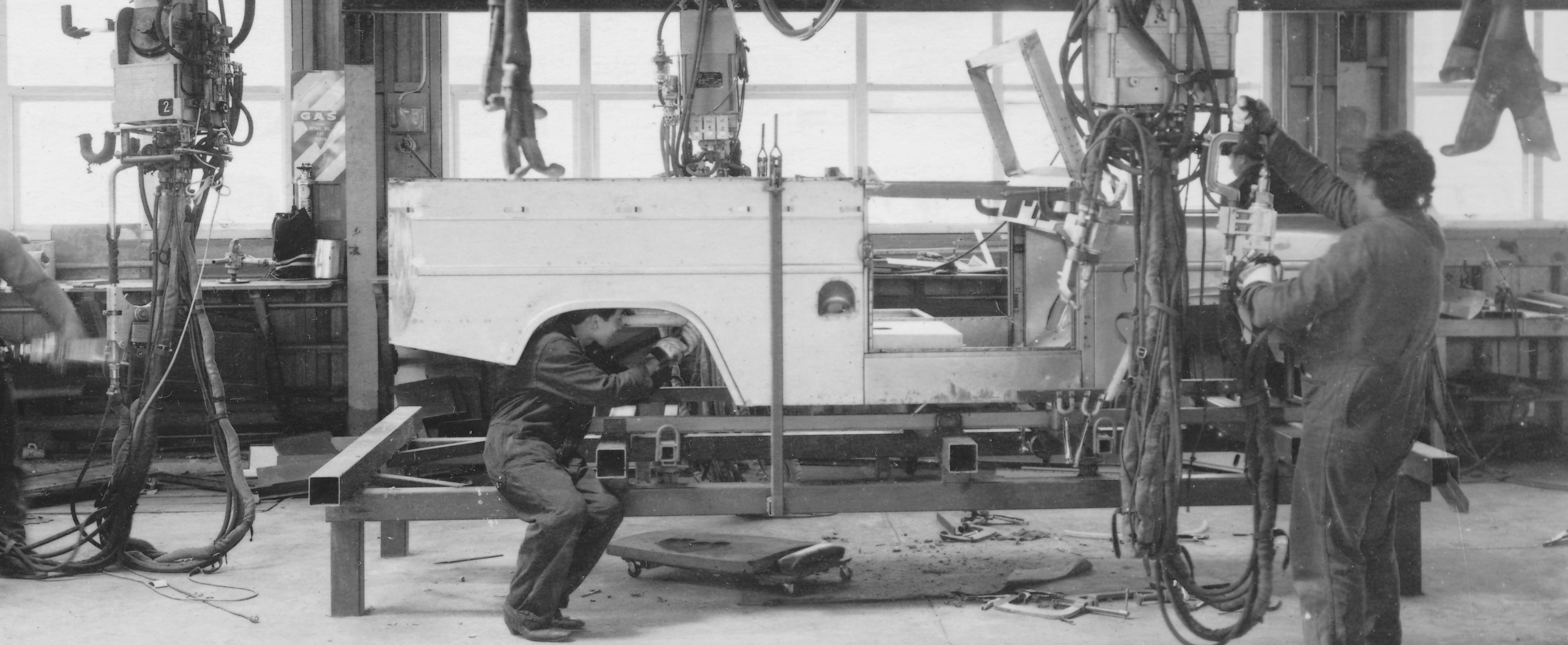
During 1964 and 1965 while the to-ing and fro-ing continued between Motokov and the New Zealand Government, work began on building trial models of the farm vehicle Phil Andrews envisaged.Noel Turner hadn’t expected Phil Andrews to succeed in persuading the Government, and the communist owned Skoda concern to pull the deal together. Work was already advancing in developing a jeep-like vehicle on the Skoda chassis. In December 1966, the first mass -production motor vehicle to be designed In New Zealand, rolled from the Otahuhu plant. The Trekka.
The Trekka couldn’t fail in the car market that existed in New Zealand at the start of 1967.In car-starved New Zealand, selling the Trekka was no problem. Less than half the price of a Land Rover, the problem became prising enough import licence out of a slightly doubtful Government. Simple, cheap and available, Trekka joined the fleets of local bodies, Government departments, as well as farmers and tradesmen.
The Trekka may have been a simple vehicle, but a big sales effort went in behind it.Dealers around the country got out selling the newcomer. The original canvas top concept gave way to a range of fibreglass canopies – the Trekka became a pick-up, a van, station wagon – for some families the first affordable new vehicle on the market, thanks to it’s low deposit finance plan.
It was no accident that in post World War Two New Zealand, the motor industry had become one of the best money making games in town.The motor industry in New Zealand wasn’t just a business. It was a real-life extension of Government policy and regulation. Civil Servants and ministers decided what models of car could be imported, and how many, whether the hubcaps had to made in New Zealand. Without the bureaucrats and ministers behind them, a car firm had nothing. Relationships, friendships with the right people were everything, and Noel Turner was a master of the game.
18. Trekka Troubles Trials and Tribulations Club
Not many people got the better of Noel Turner. Margaret Philips from the Marlborough Sounds did. To the tune of $1,600.A disgruntled Marlborough Trekka owner launched probably the biggest single consumer campaign ever in New Zealand. Margaret Philips was refused a refund on her Trekka, and took her case as far as the Prime Ministers office. The Philips ultimate weapon was a publicity trip through the North Island – placard-clad Trekka in tow – to the door of Noel Turner.
In the 1960’s in New Zealand, buying a new car was a major step in life. Popular models were in such short supply, a hopeful buyer without access to funds in a foreign currency might never make it to the top of the waiting list.From Kevin Watson’s Mangere Fish ‘n Chip shop, to the Gisborne rural mail run where Tom Hindmarsh put 300 thousand miles on a single Trekka, the awkward looking jeep became for a time, part of the New Zealand streetscape.
20. Southern Mates and Battletruck
There were those who were wary of claims about Trekkas offroad ability. But Roger Taylor and his mates weren’t among them.Roger Taylor and his Trekka driving mates took off-roading seriously around the southern lakes town of Wanaka. River fording and tracks hours from roads were all in a weekend’s outing as they went hunting in their Trekkas. And then came a film crew shooting Battletruck, looking for a vehicle.
The 1960’s weren’t the best times to be trading behind the Iron Curtain, at least according to the dominant political view in the West.Building a motor vehicle In New Zealand with mechanicals from behind the Iron Curtain at the height of the Cold War, was not without its moments. New Zealand’s Secret Service kept tabs on Noel Turners acitivities, and those of the Czechs and Russians who would visit the Otahuhu plant. Even today, the SIS is keeping some of those secrets – secret.
In New Zealand he became Mr Skoda. Josef Kaplan had nearly a quarter of a century with the Czech carmaker under his belt, when he and his family landed in New Zealand in 1968.The Skoda and Trekka business in Otahuhu saw friendships – sometimes lifelong – built despite official frowning. Josef Kaplan and his family fled just before the 1968 Soviet crackdown in Prague and for two years became a part of Skoda folklore in New Zealand.
The Trekka’s claim “Goes most anywhere” was put to the test in July of 1969. Five of the vehicles were flown into South Vietnam at the height of the war in the divided country.Trekkas would serve with a New Zealand-run civil hospital, as runabouts and impromptu ambulances. Heavy rain and rough roads would prove a challenge, but at least black marketeers chose to ignore them, stealing and plundering the more ubiquitous Jeeps and Land Rovers, where there was a ready market.
At the same time that Motor Holdings had been developing the prototype stage of the Trekka, a young New Zealand diplomat was working on a far more ambitious project in London.As Noel Turner was successfully turning the Trekka concept into reality, a brash young ex-diplomat was having less joy with a more ambitious project. Alan Gibbs needed to convince the Government to issue import licences for his scheme to build a fibreglass-bodied saloon car the Anziel Nova. He brought in the founder of Holden from across the Tasman, but Gibbs would find it was harder than he thought to join the select and priveleged club that was the New Zealand motor industry.
The 1960’s was Noel Turner’s decade. During the 1950’s he’d struggled against his stepfather Arthur to gain a free hand in the running of the company. But in those year’s he’d built up a solid core of loyal employees.Noel Turner relished being outside the motor industry “establishment”. Free from alliegances to a “big name” he and a close circle of loyal workmates built a diverse motor assembly business through the 1960’s. They built the first Japanese cars, and Turner saw early on, just where the future lay. But by the end of the 1960’s the Government started to unwind the game he played so well.
While the Trekka was selling steadily in New Zealand, Motor Holdings began to eye up the possibility of becoming an exporter.Government to Government negotiations saw the Trekka gain duty-free access to Australia in return for an equivalent value of duty free Holdens. Pakistan ordered one to assess for local production. But the biggest deal of all saw the first shipment of 100 Trekka kits to Indonesia for the start of what was hoped to be a major export trade.
Motor Holdings efforts to find overseas markets for the Trekka were not simply about looking for icing on the domestic sales cake.
The Trekka was the ultimate exploitation fo the web of protectionism, control and regulation built around the New Zealand motor assembly industry. But what the Government giveth, the Government taketh away, and by the early 1970’s the barriers which kept Trekka rivals at bay were coming down. At the same time the solid foundation which the VW Beetle had provided Noel Turner, was crumbling.
The perfect market conditions into which the Trekka had been born in 1966, had been decades in the making.
There had been the ascendency of Bill Sutch and his philosophy of fostering greater industrialisation.
By 1971 the dream run of Noel Turner and the family empire was in trouble. A major Japanese car franchise, the key to the future, had eluded him. The European makes Fiat, VW and Skoda were struggling. Noel and his closest circle of associates met one weekend to put together the deal for a new future for the firm. The Trekka’s days were numbered.
The Trekka didn’t die with Noel Turner’s departure, but it’s life support was unplugged. Noel had been its champion, but even so hadn’t been able to protect it from a more demanding and competitive marketplace.Noel Turner’s departure co-incided with the start of major change in the New Zealand motor industry. It was increasingly about Japanese vehicles, and about adapting to a less regulated, less protected environment. Local car assembly had once been dominated by wealthy “old” families and overseas car makers, with Noel Turner and his firm’s Kiwi ingenuity carving out its place in the game. The assembly industry though was doomed.